How To Not Get Into Heaven
How To Not Get Into Heaven
Hidden under the many layers of the overarching narrative of Scripture is a particular understanding, now a presupposition, that if one were to follow the whole Old Testament law pre-Christ, it would be the equivalent of achieving salvation or gaining entrance into heaven when they die. This understanding plays into how we view the relationship between the Old and New Testaments, their continuity and discontinuity, and how salvation is portrayed both pre- and post-Incarnation.
But does this way of framing salvation, the purpose, and the fulfillment of the law actually reflect what the Bible teaches? What does it mean for Jesus to ‘fulfill the whole law’? Why was the law given in the first place? These are all questions I want to try and briefly answer to help us examine this presupposition in a new light.
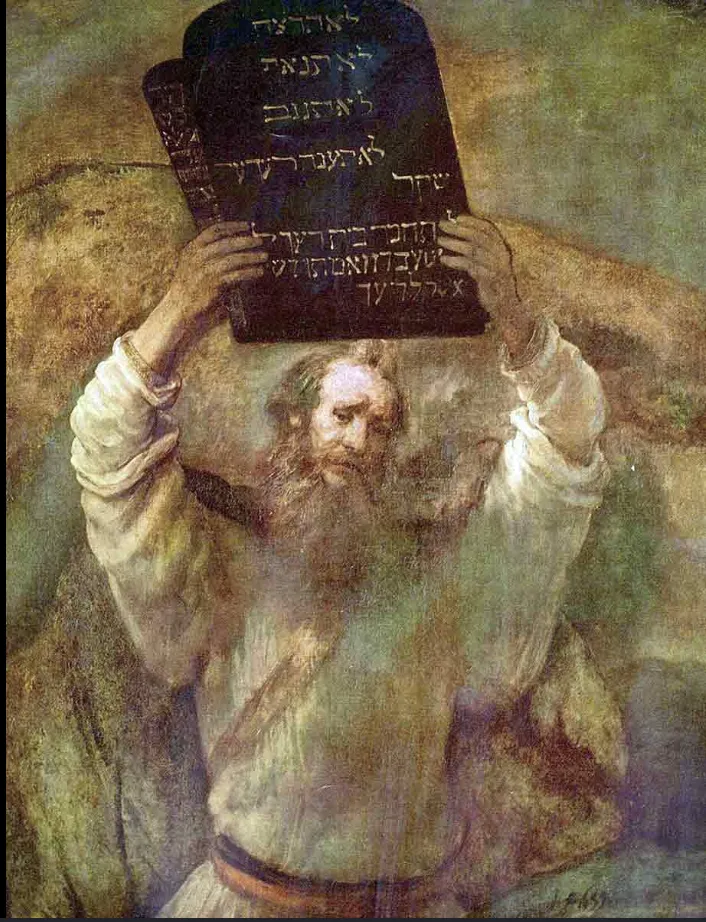
First, what was the law given for? Since the fall of Adam and Eve, humankind has been affected and weakened by the consequences of sin. The further away humanity strayed from God, the more corrupt they became, and with their corruption, the world, indeed the whole cosmos, was tainted. During the time of Moses, the Torah was given as a means by which the taint of sin could be maintained, and the people of God could find some reprieve from its destruction. It provided a means for the people to be cleansed through ritual, it set them apart from the rest of the nations, and, not to be forgotten, allowed for the presence of God to dwell in and amongst them in the tabernacle.
Alongside the Torah given to bring purification and a way to manage the corruption that sin brought, it had attached to it promises and curses. These promises and curses would be realized based on the faithfulness of the people of God. Some of those promises were physical health, abundance, prosperity, protection, peace, the divine presence of God dwelling among them, and longevity in the promised land. The curses connected to the Torah were consequences of the people's faithlessness towards God. Instead of peace, there will be war. Instead of health, there will be sickness and disease. Instead of prosperity, famine. (Deuteronomy 28)
To understand the law and its affiliated promises and curses, we need to position it within the overarching narrative of Scripture. The promises and curses of the Torah are temporally and spatially limited, and were given with that in mind. What do I mean by this? I mean that they were given to a specific people, the Israelites, for a specific time period, after the Exodus and before the Messiah would come, and limited to a particular area, the land of Canaan. These promises were made to the Israelites through the revelation of the Torah to Moses, in the broader context of the promises made to Abraham hundreds of years earlier. What did God say to Abraham?
“Go out from your country, your relatives, and your fathers household to the land that I will show you. Then I will make you into a great nation, and I will bless you and make your name great, so that you will exemplify divine blessing. I will bless those who bless you, but the one who treats you lightly I must curse, so that all the families of the earth may receive blessing through you.”
Genesis 12:1-3
If we were to zoom out from the specific promises given to the Israelite people after their liberation from the Egyptians, we would see that they are in the context of what was already promised to Abraham, that all the families of the earth will be blessed through his descendants. The taking of the land of Canaan, the peace, prosperity, and protection promised by staying faithful to God through obedience to the commandments of the Torah, function within this overarching narrative and God's purpose to bless all the nations of the earth. This blessing had entailed within it liberation from that which has enslaved all of humanity since the fall of Adam and Eve, sin, death, and fallen spiritual powers(demons).
Instead of the oversimplified and rather unhelpful framing of salvation as “going to heaven”, salvation, as it is described in the Old Testament, is being freed from sin, death, and the demonic powers. And since we are created in the image of God and were given authority over creation, our salvation will bring about the salvation of the whole cosmos(see Romans 8:18-23). Keeping Torah, therefore, is not a necessary requirement of salvation and “going to heaven” when we die, but the way that the Israelites could manage their own sin, purify physical space, and allow God to dwell amongst them.
Now we are brought to the question of the function of the Torah within the New Covenant. Jesus says in Matthew 5:17 that He came not to abolish the law, but to fulfill it. Somewhat understandably, people have interpreted this to mean that Jesus fulfilling the law was Him perfectly living out all of the commandments of the Torah, which made Him righteous. But is that what Jesus meant when He said He came to fulfill it? The way Jesus fulfilled the law was by bringing it to completion, so much so that He went beyond what it required, but brought it to a state of overflowing. Jesus fulfilling the law is bringing about the ultimate purpose that the Torah was playing a part in, that is, freeing humanity and the cosmos from the power of sin, death, and the demonic powers.
Paul, in his letter to the Galatians, sees the message of the gospel in the same promise to Abraham we have already looked at:
And the Scripture, foreseeing that God would justify the Gentiles by faith, proclaimed the gospel to Abraham ahead of time, saying, “All the nations will be blessed in you.”
Galatians 3:8
If we follow this throughline, as Paul does, we will see the beautiful continuity between the Old and New Testaments. Jesus, by finally defeating the power of sin, death, and the fallen spiritual powers, brings to completion what the Torah was playing a role in. Rather than seeing the Torah and the Old Covenant as something to be forgotten, dismissed, or separated from the life of the New Covenant, Paul sees them as a teacher and guide along the way to the perfect revelation of God, that is, Christ Jesus.
The law was never given as a means of salvation for humankind, but rather as a means for the Israelites to be purified from the taint of sin, a way of managing the corruption and destruction that it brings. If this is the case, the way we inherit and participate in salvation is not by passively receiving Christ's righteousness, which He gained by perfectly obeying the law, i.e., works-based salvation, but through faithfulness to Him. This faithfulness looks like confessing with our mouths, believing in Him, being baptized, joining His Church, and living a life of continually becoming more and more like Him. We now fulfill the law because it has been written on our hearts. The Spirit of God that dwells in us produces the fruits of the Spirit, enabling and aiding us to love God and to love our neighbor.
In conclusion, this particular understanding of the law's function, how Christ fulfills the law, and what that means for our salvation is unfounded in the narrative of Scripture and in the thinking of both the authors of the Old and New Testaments. The works of the law, and perfectly obeying them, have granted no one entrance into heaven, and according to Paul, the way we can be sure salvation is not found. (Galatians 3:11) This goes to show how faulty interpretations of the Old Testament will inevitably skew our interpretation of the New.