Ritual Participation
I was recently rereading a book called "The Religion of the Apostles: Orthodox Christianity in the First Century" by Stephen De Young, perhaps the most enlightening book about the overarching narrative of Scripture I have ever read. In his chapter on "God's People Israel", De Young focuses on how exactly the Israelite people were brought together by the hand of God, and how they continued to re-enact and participate through ritual in that work of God that liberated them from the dark spiritual powers of Egypt in the events of the Exodus.
At the first Passover meal, each family was to take a lamb that would then be slaughtered and eaten. The blood of this sacrificial lamb was to be smeared on the doorposts and on the doorframe, marking them out so that the judgment of the Lord would pass over them. Upon receiving these instructions from the Lord, the Israelites are told to observe this ritual as a community for generations to come.
This ritual participation extended, finding its ultimate fulfillment in Christ on the cross. Both Matthew and Mark, in their gospels, confirm that Jesus was slain during the Passover, the same period that the people of God had been remembering, re-presenting, and participating in their liberation from the tyranny of Egypt and its gods for thousands of years. De Young takes it one step further when he comments:
"Through Christ's death and Resurrection, the new Passover, those spiritual powers are defeated and thrown down once for all, and the power of death is made powerless."
Those who unite themselves to Christ and become a part of His body participate, ritualistically, in the death and Resurrection of Christ through our worship and life of obedience and faithfulness to Him.
There is often a false dichotomy constructed between the Old and New Testaments, as if they were somehow at odds with each other. But just this one example goes to show that, rather than revealing a discontinuity, there is a beautiful continuity and fulfillment of the Old in the New that we who are in Christ not only get to see within the text itself but also get to participate in the here and now.
Many are afraid of the word 'ritual', claiming that it somehow detracts from the authenticity and spontaneity of their individual walk with Christ, but, to be quite frank, that is a bunch of hogwash. I would put forth that people shy away from the word "ritual" for mostly reactionary reasons. Firstly, it is reactionary to the false dichotomy constructed between the Old Testament way of doing things and the New Testament way of doing things. Secondly, it is reactionary to the Roman Catholic church and the language they use in their worship and theology.
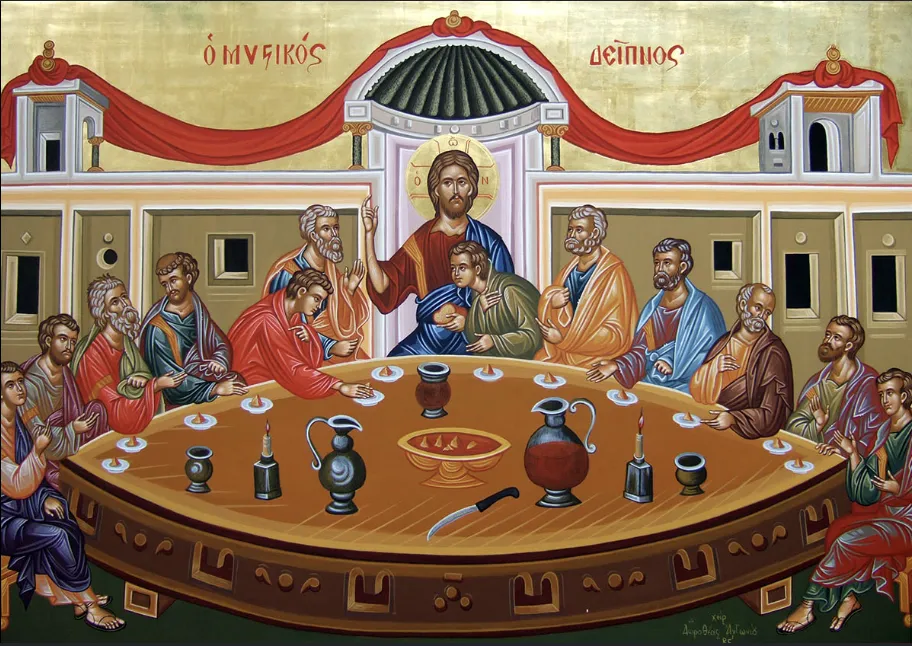
If we can put these things aside for a moment and allow ourselves to be welcomed into what I believe was the practice of the early Church, ritual participation can be a part of our lives again as Christians of the 21st century. What does ritual mean? It does not mean dogmatic rules to add onto the list of our responsibilities that we must follow or else. It is not about works that somehow merit God's grace and favor. It is about entering into the mystery of the life of the Church, which began when Jesus first celebrated communion with His disciples, claiming that the bread and wine shared were His own body and blood, and that whoever drinks His blood and eats His flesh has life (John 6).
This type of participation that we are called to enter into is not something that can be systematized or broken down into its parts mechanistically to figure out exactly how it works, but rather it is receiving and inheriting the practices of the Church that have been around for 2,000 years, such as holy communion, keeping the Sabbath, and fasting. All the many feasts and celebrations that the Israelites were instructed to observe and remember in the Old Testament were fulfilled by Christ in his life, death, and resurrection, which His Church now remembers and participates in through ritual. To just name one example, Christ's crucifixion and resurrection are events that we remember and celebrate every year as Christians. We hear the Scriptures read, we look upon the cross and then the glorious empty tomb, and finally, with our bodies, participate in his resurrection life by taking in his body and blood in holy communion.
To be a Christian is an embodied experience. To believe in God with our minds only is to be like the demons, for even they believe that Jesus is Lord of heaven and earth. To believe in God only with our minds is to miss out on the majority of the life that Christ offers us this side of the second resurrection. To believe in God only with our minds is to live in a perpetual state of cognitive dissonance and to not know the life of the Church. The full-body experience, the full self experience, that includes mind, body, and soul, is found through this ritual participation in the life of the Church that Christ first laid out and the Apostles first lived out in their lives and ministries. Furthermore, this ritual participation does away with the great divide that many have created between the Old and New Testaments and brings us face to face with what Christ meant by fulfilling the whole law. The old covenant is brought to completion by the new through embodied, whole self participation within the context of community and the life of the Church.
Many today find themselves floundering around, trying to figure out "what it means for them to follow Christ," when this places an unnecessary and cumbersome weight on their shoulders that will eventually lead them not to be made into the image of Christ, but to make Christ into their own image. The history of the Church has many examples of this very thing. No one is asking us to reinvent the wheel just because we are living in the difficult times we are living in. Every age of the Church has had its problems to deal with. What is the anchor for us in a fallen world is the ways of life that have been passed down to us by the Church. There is no secret; this is not an individualistic scavenger hunt. This is binding ourselves to the body of Christ and becoming more and more like Him through ritual participation.